Summary
What the record shows
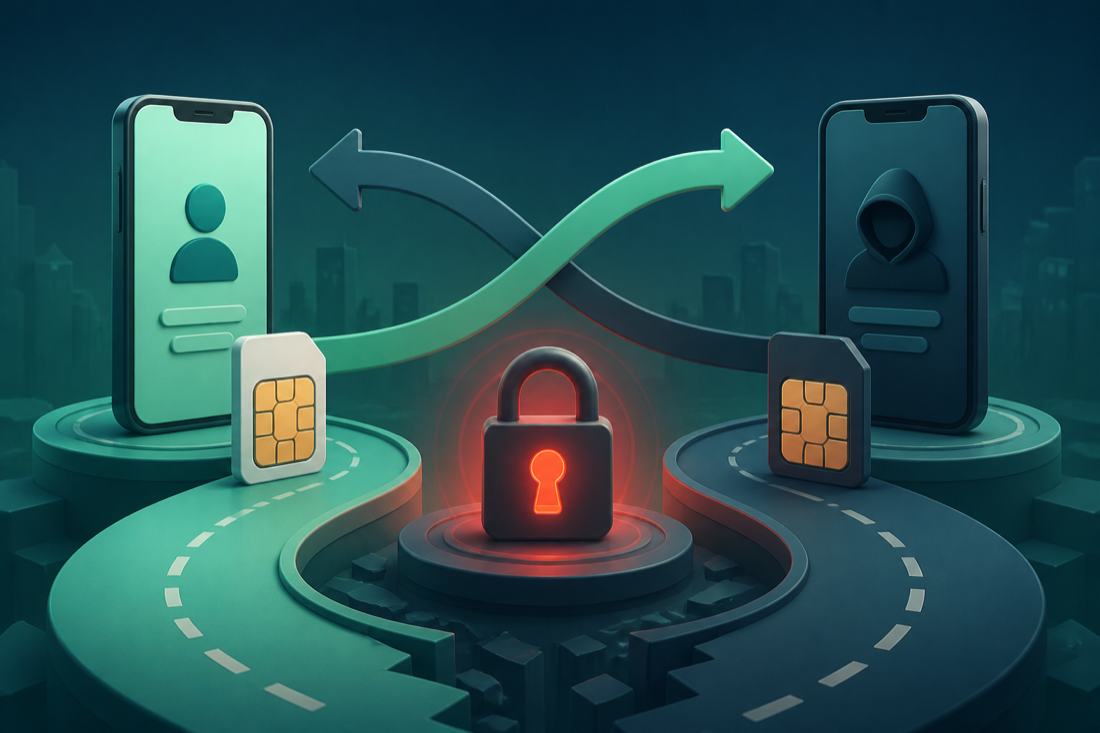
An offender gathers identity information and persuades or tricks a carrier into moving the victim’s number to a device they control. The victim’s phone loses service while password resets and SMS codes go to the offender.
US communications rules have been strengthened around SIM changes and port-outs, but account holders should still use carrier PINs, strong email security and app- or hardware-based authentication where available.
Key findings
What is established and what is not
- Sudden loss of service combined with account alerts requires immediate carrier and financial-provider contact.
- SMS authentication is better than no second factor but remains exposed to number takeover.
- Protect the primary email account because it can be the recovery key for many other services.
Response and denials
The other side of the record
The reviewed material describes a distributed pattern using changing accounts, numbers and sites. No single identifiable operator or attributable operator denial was located.
Some approaches misuse the identity of mobile carriers, banks or account providers. Those impersonated organisations are not treated as participants; verify any contact through an independently located official channel.
Global Scam Report evaluation
Summary assessment
Established account-takeover method — high confidence. Loss of mobile service can have innocent technical causes, so carrier records are required to confirm an unauthorised swap.
Reference record
Sources reviewed
- GovernmentFederal Communications Commission · 15 November 2023FCC adopts rules to protect consumers from SIM-swap and port-out fraudOpen source ↗
- GovernmentFederal Communications Commission · 15 November 2023Protecting consumers from SIM-swap and port-out fraud — report and orderOpen source ↗
- GovernmentFederal Communications Commission · 3 July 2024SIM-swap and port-out fraud information-collection noticeOpen source ↗
- GovernmentFederal Bureau of Investigation · 20262025 Internet Crime ReportOpen source ↗
- GovernmentUS Federal Trade Commission · February 2025Consumer Sentinel Network Data Book 2024Open source ↗
- GovernmentUS Federal Trade Commission · 10 March 2025Top scams of 2024Open source ↗
- GovernmentUS Federal Trade Commission · May 2025How to avoid a scam — fraud handbookOpen source ↗