Summary
What the record shows
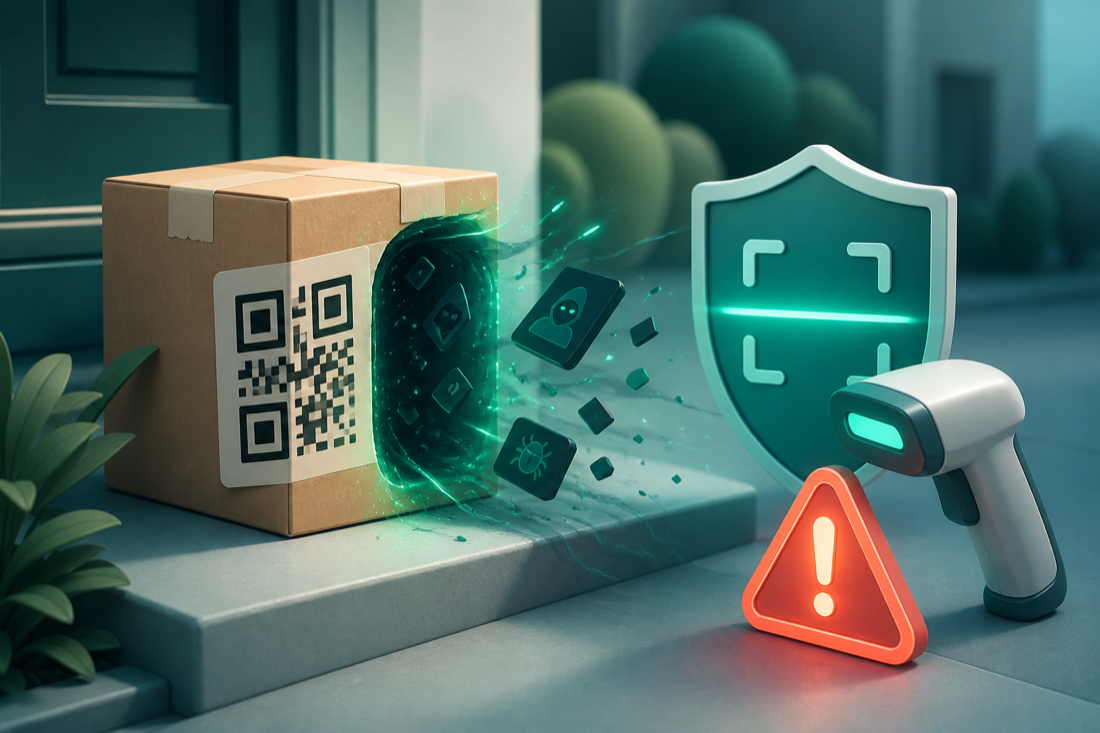
A recipient receives an item they did not order, sometimes with no clear sender, and a QR code inviting them to identify the sender, arrange a return or learn more. Scanning can open a phishing site or trigger a malicious download.
This overlaps with “brushing,” where low-value parcels are sent to generate false reviews, but the QR-code variant adds a direct digital compromise risk.
Key findings
What is established and what is not
- Do not scan codes in unsolicited parcels; use a known retailer or carrier account to investigate.
- A physical object can make a digital link feel more trustworthy without authenticating it.
- If a code was scanned, review permissions, change exposed credentials and contact the relevant financial provider.
Response and denials
The other side of the record
The reviewed material describes a distributed pattern using changing accounts, numbers and sites. No single identifiable operator or attributable operator denial was located.
Some approaches misuse the identity of retailers, carriers or purported senders. Those impersonated organisations are not treated as participants; verify any contact through an independently located official channel.
Global Scam Report evaluation
Summary assessment
Documented, active delivery-linked phishing technique — high confidence. Not every unsolicited parcel contains a malicious code, and technical inspection is needed to establish what a particular code does.
Reference record
Sources reviewed
- GovernmentFederal Bureau of Investigation · 31 July 2025Unsolicited packages containing QR codes used to initiate fraudOpen source ↗
- GovernmentUS Postal Inspection Service · 24 March 2025Brushing scamOpen source ↗
- GovernmentUS Federal Trade Commission · 6 December 2023Scammers hide harmful links in QR codesOpen source ↗
- GovernmentUS Postal Inspection Service · 19 May 2025Smishing: package-tracking text scamsOpen source ↗
- GovernmentFederal Bureau of Investigation · 20262025 Internet Crime ReportOpen source ↗
- GovernmentUS Federal Trade Commission · February 2025Consumer Sentinel Network Data Book 2024Open source ↗
- GovernmentUS Federal Trade Commission · May 2025How to avoid a scam — fraud handbookOpen source ↗